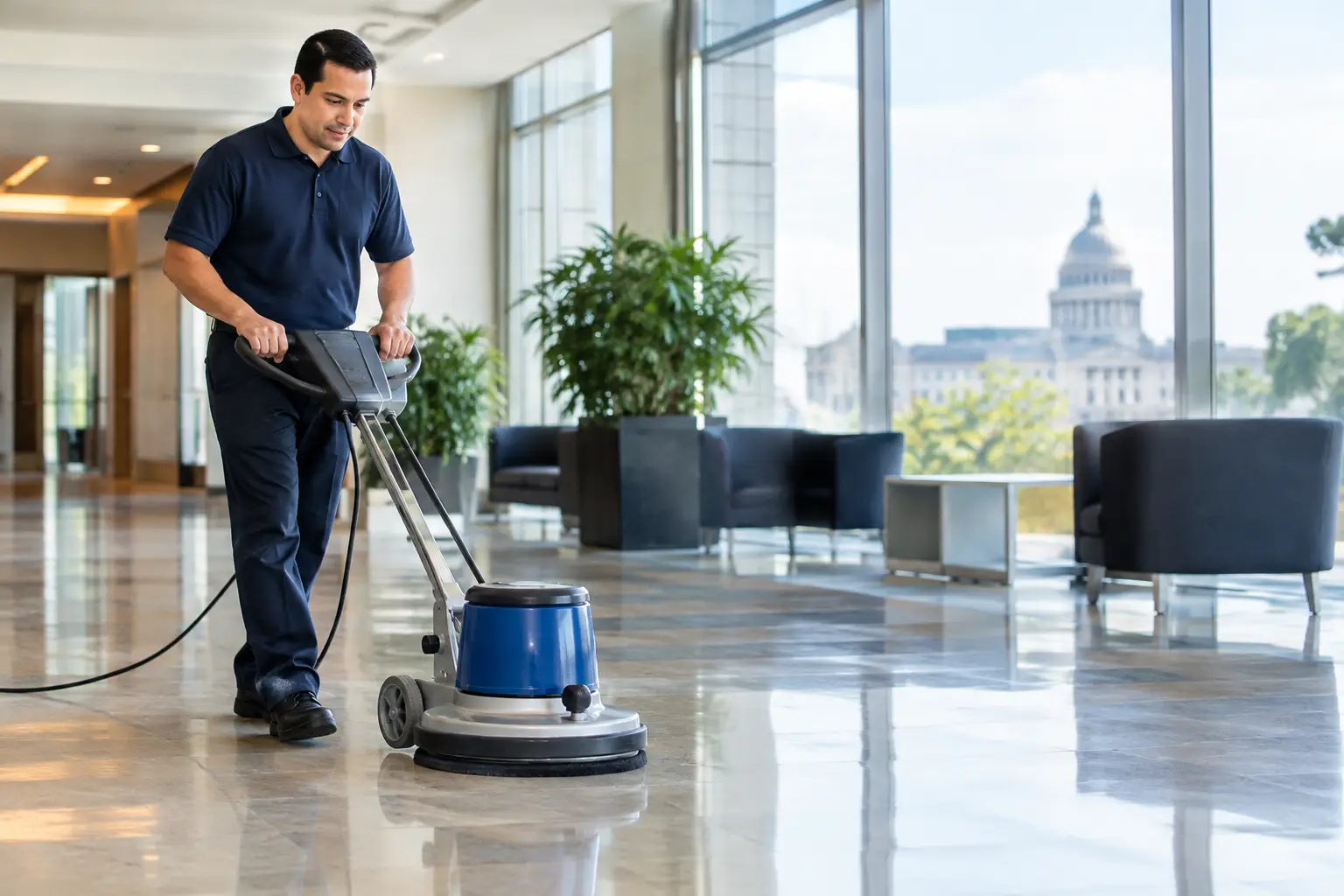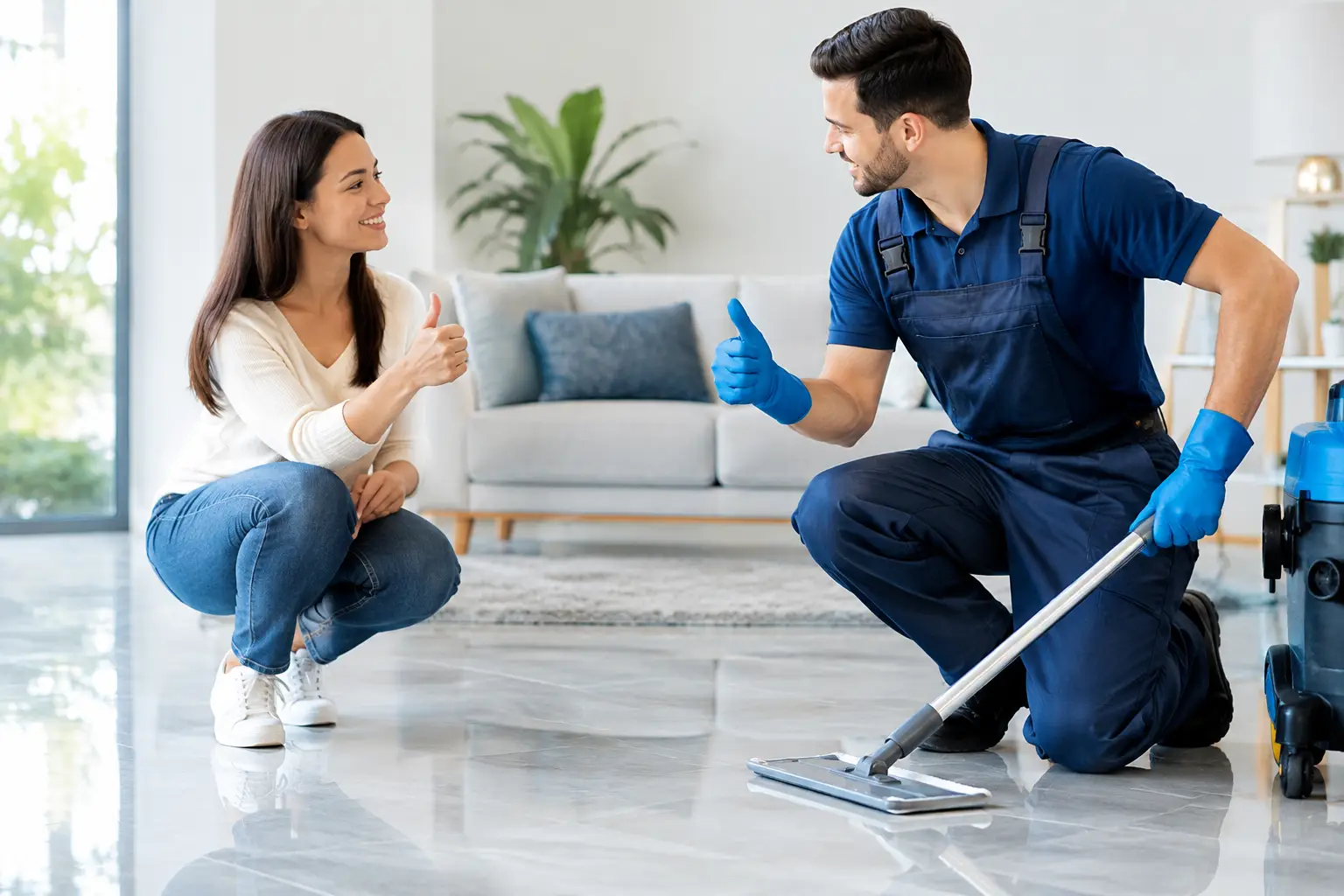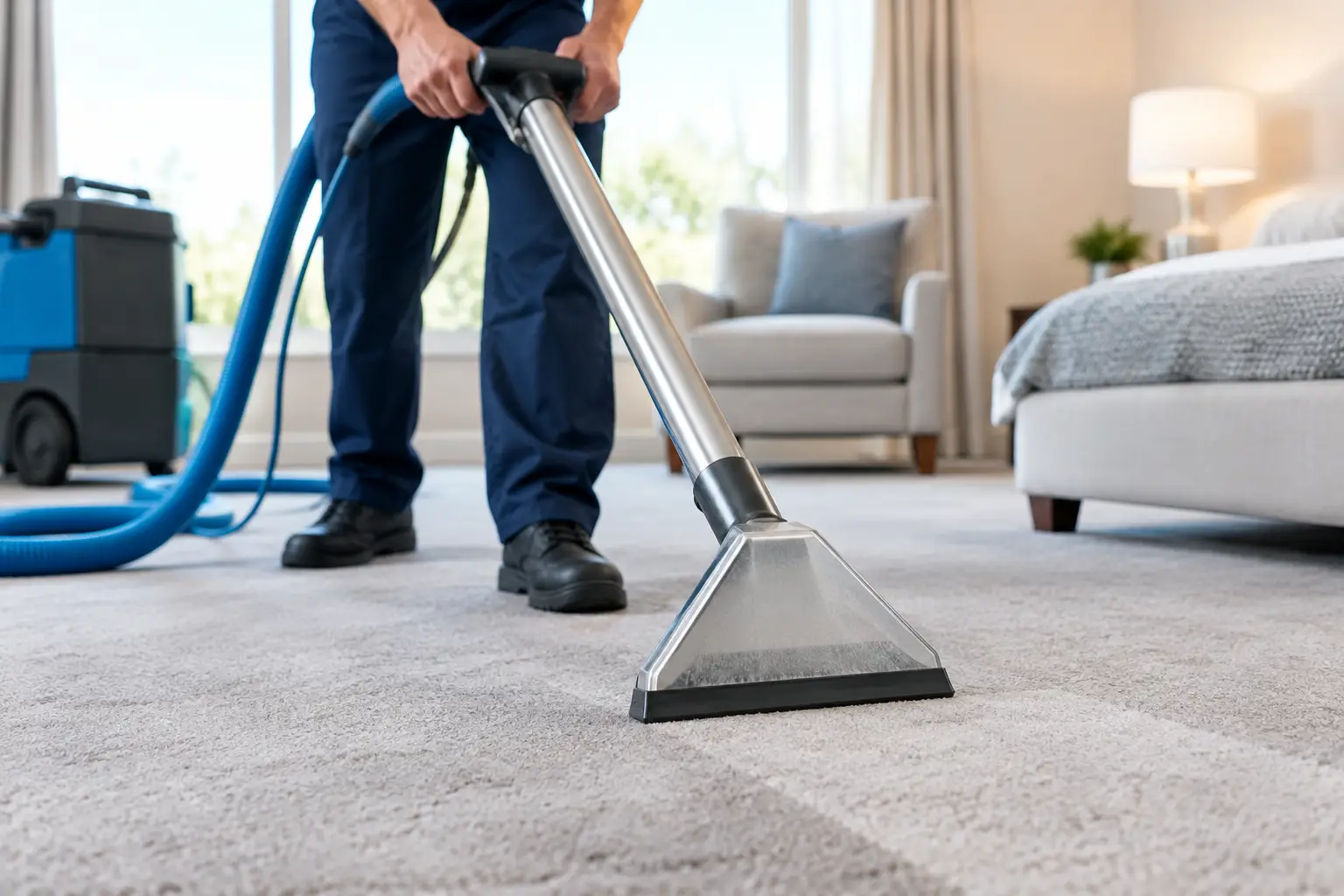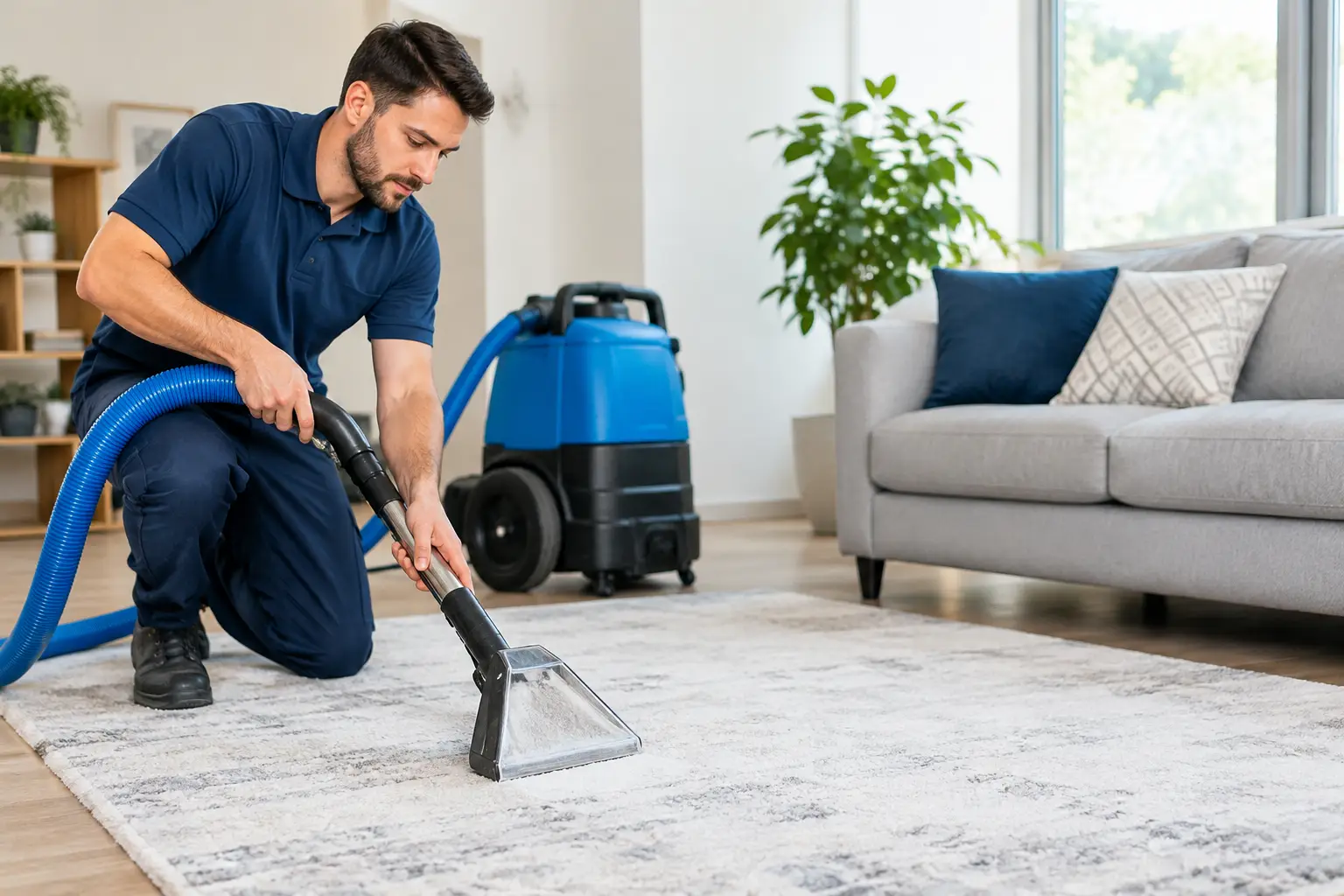
A lobby floor can look acceptable at 8:00 a.m. and still be carrying salt residue, winter slush, food oils, pollen, and tracked-in soil from dozens of shoes. That is why office floor sanitation is more than a quick pass with a mop. It is a practical part of maintaining a healthy, professional workplace where employees can focus and visitors feel confident walking through the door.
For Capital Region offices, the challenge changes with the season. Snow, sand, and de-icing materials can be especially hard on carpet, tile, grout, hardwood, and stone. A consistent plan protects the appearance of your space, helps preserve flooring materials, and addresses the soil that ordinary vacuuming or spot mopping leaves behind.
What Office Floor Sanitation Actually Includes
Sanitation and cleaning are related, but they are not identical. Cleaning removes visible dirt, dust, debris, and residues. Sanitizing reduces certain germs on an already cleaned surface when the product, dwell time, and surface type allow for it. A floor that has not been properly cleaned first may still have grime that prevents a sanitizer from doing its intended job.
In a working office, floor sanitation usually starts with routine removal of dry soil, followed by prompt attention to spills and a scheduled deeper cleaning method appropriate for the floor. The right process depends on whether you have commercial carpet, luxury vinyl tile, ceramic tile, sealed hardwood, natural stone, or a combination of surfaces.
This distinction matters because a one-size-fits-all approach can create problems. Too much water can affect carpet backing, wood, and grout. A harsh degreaser may dull a finished floor. The wrong cleaner on marble or other calcareous stone can leave permanent etching. Good results come from matching the method to the surface, not from using the strongest product available.
Why Floors Need More Attention Than They Get
Floors collect everything brought into a building. Shoes track in outdoor contaminants, while rolling chairs, food traffic, printer areas, break rooms, and entryways create concentrated wear. Carpeting holds fine particles below the surface, and hard floors can develop a dull film that changes how the entire office looks under overhead lighting.
The issue is not only visual. Grit acts like sandpaper under foot traffic. It can wear carpet fibers, scratch finishes, and grind into grout lines. Moisture near entrances can create slip concerns and invite odors if it remains trapped in mats or carpet. In shared offices, cleaner floors also support the broader work of keeping common areas comfortable for employees and guests.
A clean reception area tells visitors that details are handled. On the other hand, stained carpet, blackened grout, and cloudy hard floors can make an otherwise well-run business appear neglected. This is especially relevant for medical offices, property management companies, professional services, retail spaces, and any organization that welcomes customers in person.
Build an Office Floor Sanitation Schedule That Fits
The best schedule is based on traffic, weather, flooring type, and the kind of work performed in the building. A quiet office with a small staff needs different care than a busy clinic or a leasing office where people move in and out all day.
Daily and Weekly Care
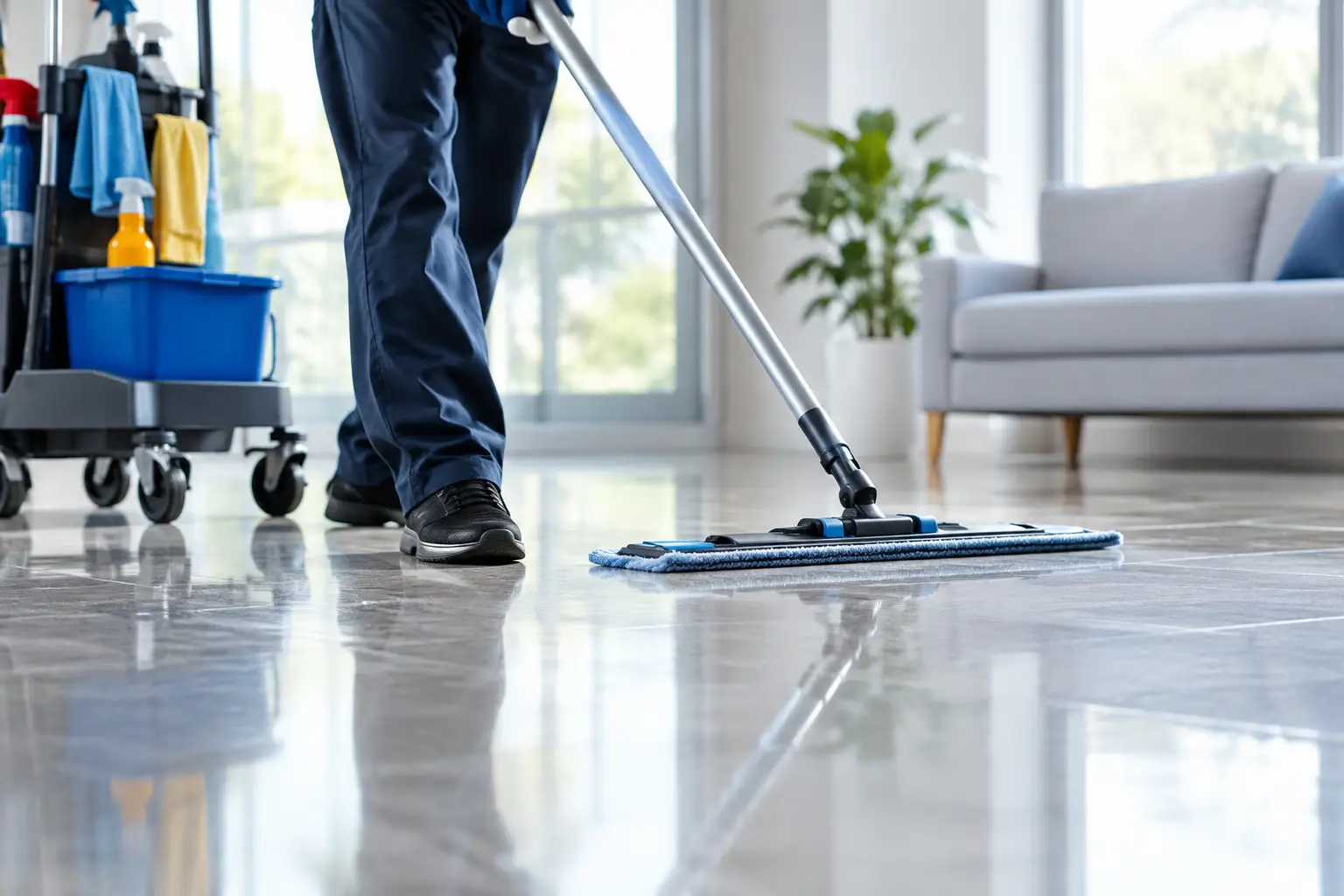
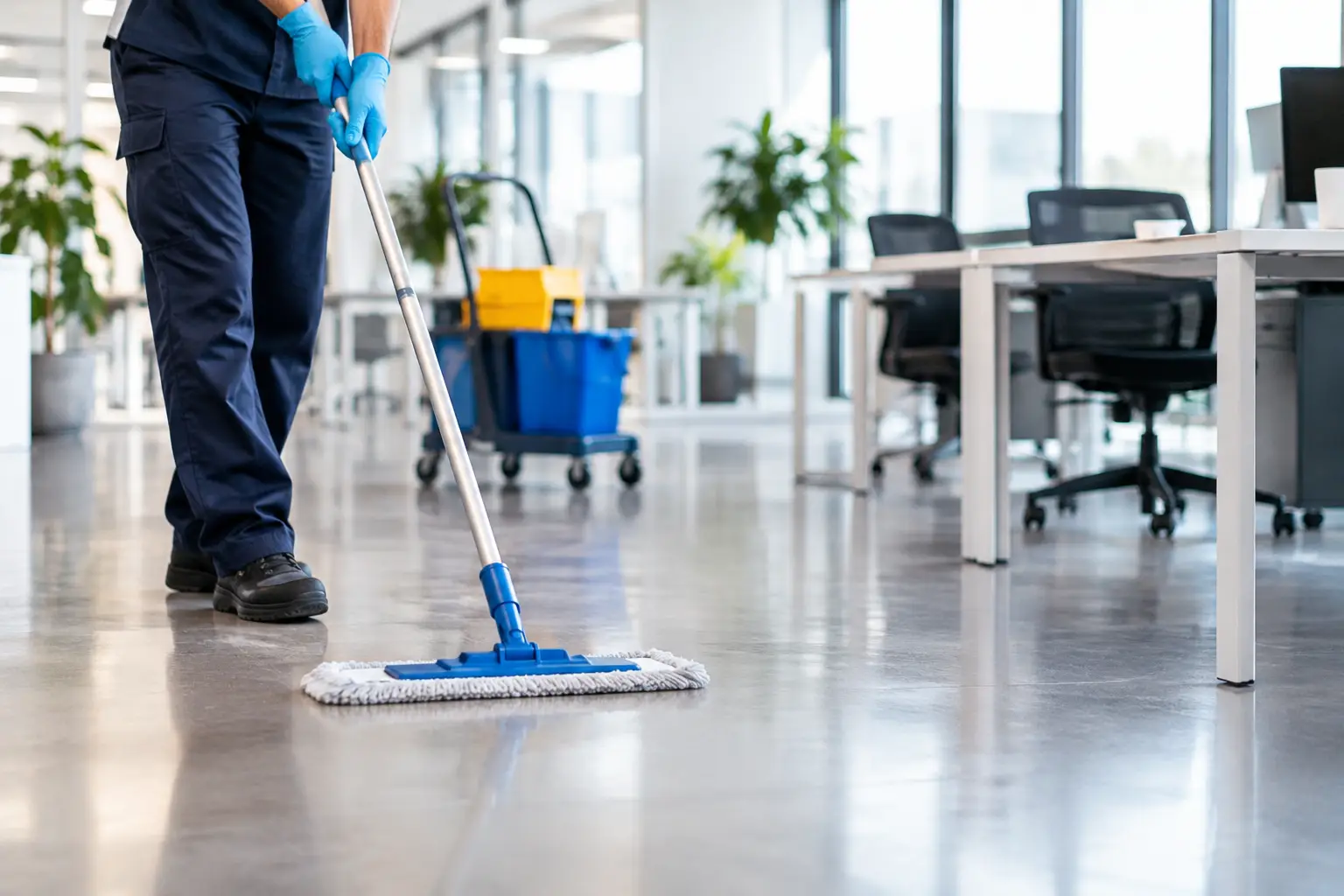
Daily attention should focus on entrance areas, break rooms, restrooms, hallways, and any place where spills are likely. Vacuum carpeted traffic lanes often enough to keep dry soil from being worked deeper into the pile. Hard surfaces should be swept or dust-mopped before damp mopping so grit is not pushed across the floor.
Spills deserve immediate attention. Blot carpet spills rather than rubbing them, which can spread the spot and damage fibers. On hard flooring, use a product approved for that specific material and avoid leaving standing moisture behind. Entry mats should be vacuumed and cleaned regularly because they are your first line of defense against the dirt coming indoors.
Weekly care may include more detailed vacuuming around edges, spot treatment, damp mopping of hard-surface floors, and inspection of high-traffic areas. If a floor looks dirty shortly after being cleaned, the issue may be residue from an unsuitable product, worn protective finish, or soil embedded beyond the reach of routine maintenance.
Periodic Professional Cleaning
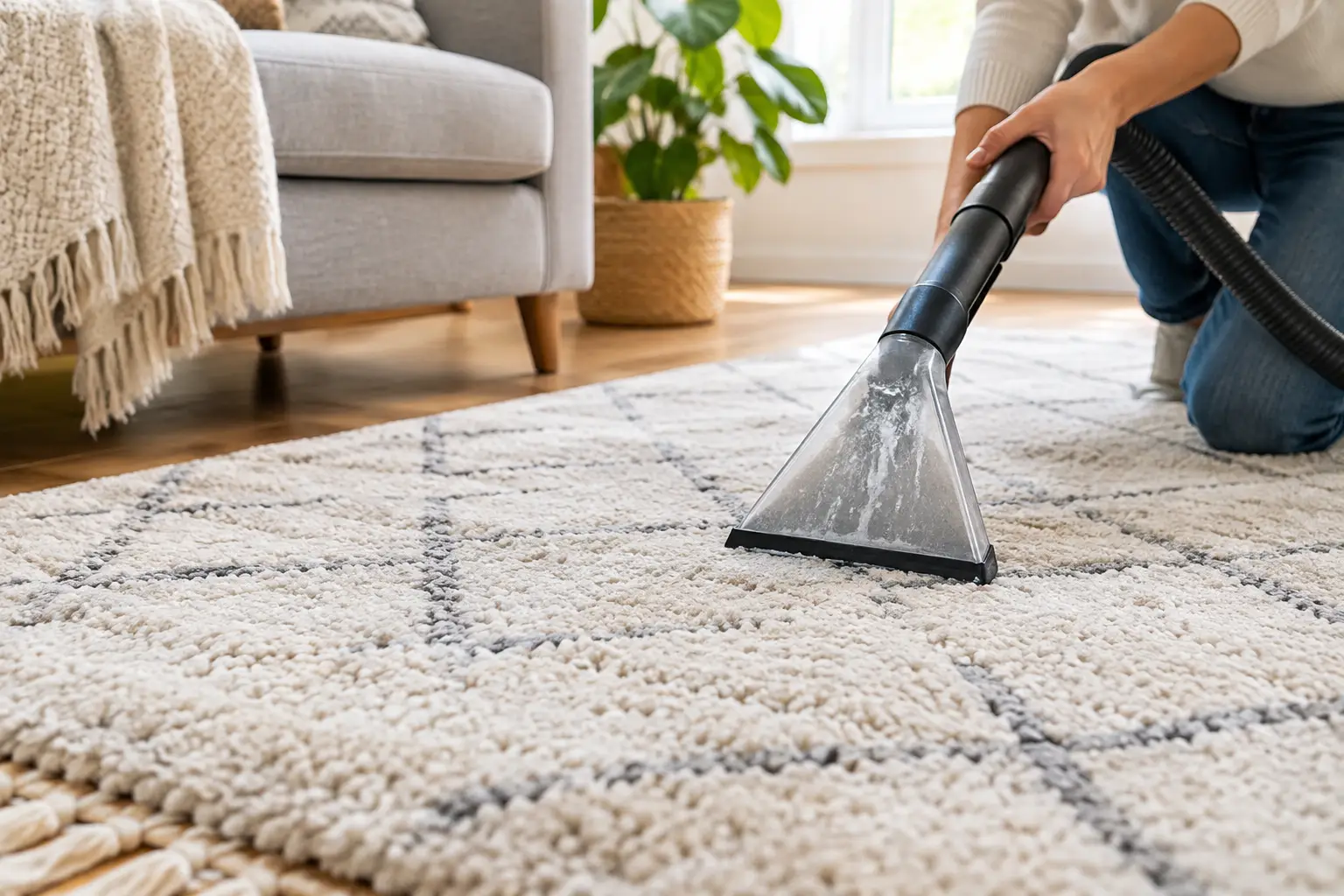
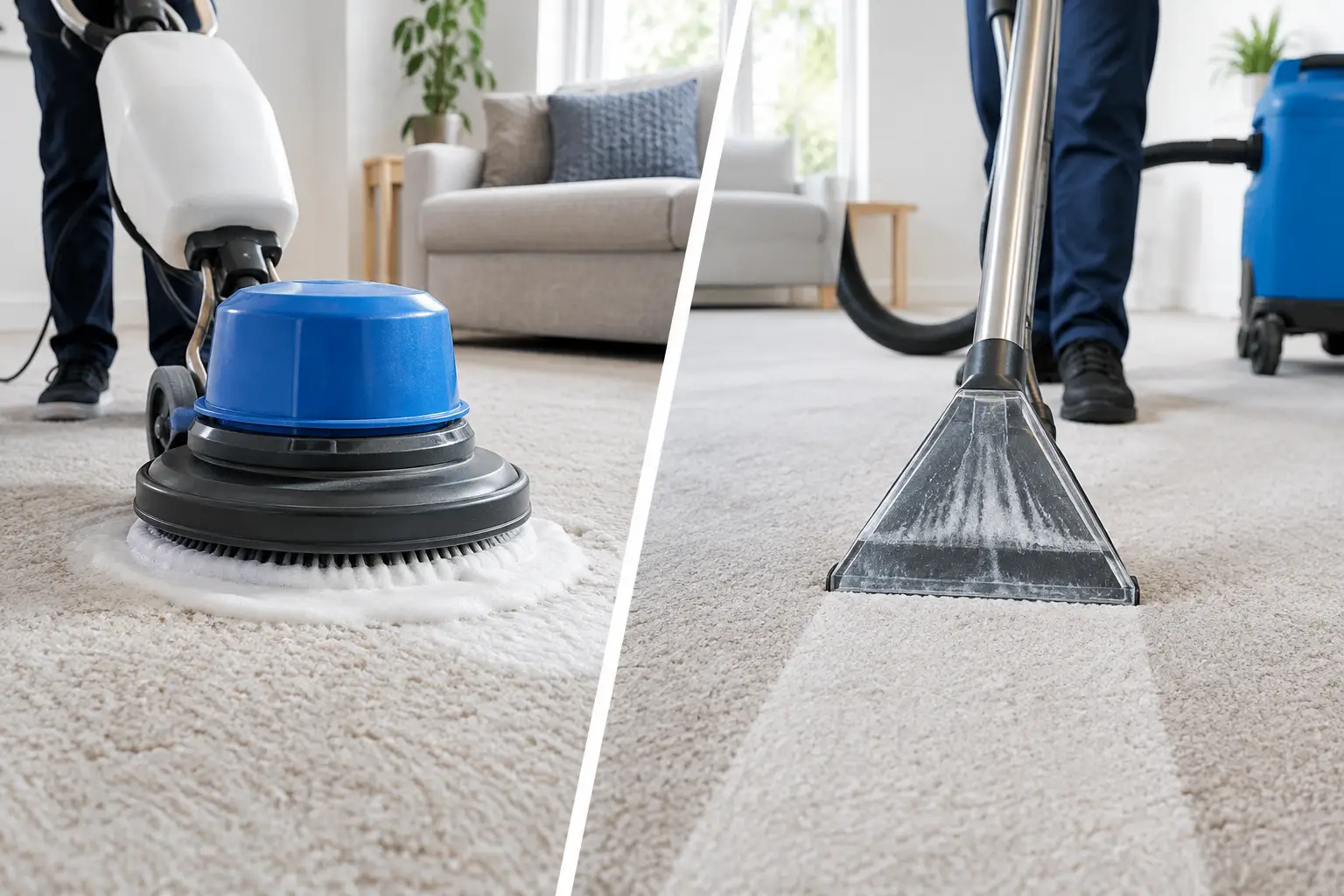
Professional service is where maintenance becomes restorative. Commercial carpet cleaning can remove embedded soil and help refresh traffic lanes before they become permanent-looking discoloration. Tile and grout cleaning can lift the buildup that mops leave behind, especially in restrooms, break rooms, and entryways. Hardwood, marble, and other specialty surfaces require careful cleaning methods that respect their finish and structure.
How often should this happen? There is no responsible single answer. A low-traffic office may need professional cleaning once or twice a year. A customer-facing facility, daycare, healthcare-adjacent office, or busy commercial space may benefit from more frequent service. Winter weather, pets in the workplace, food service, and frequent events can also move the schedule forward.
Choose Methods That Protect Each Floor Type
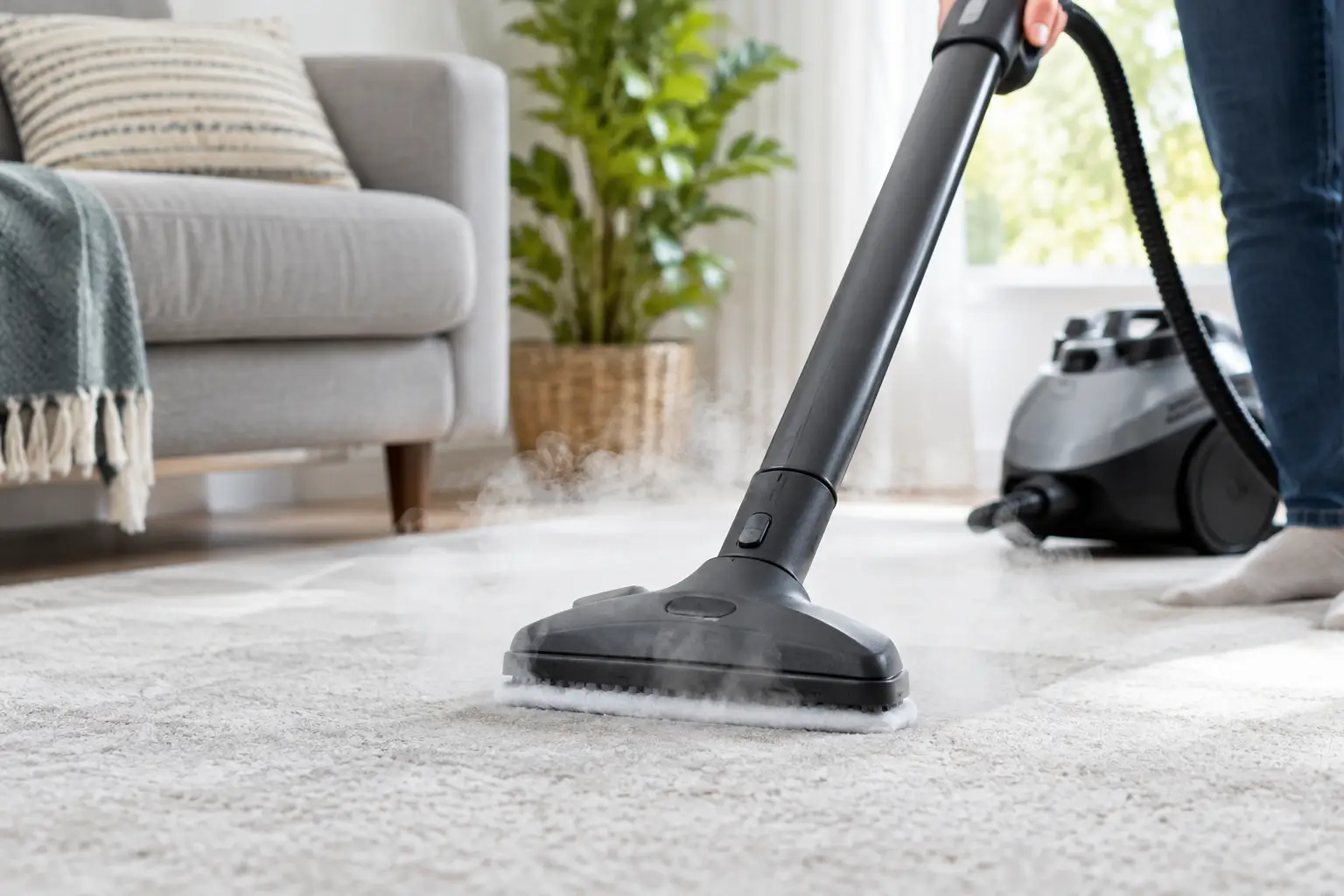
Commercial carpet requires thorough soil removal without overwetting. The goal is to remove what has settled into the fibers while supporting a reasonable drying time so the office can return to normal use. Regular professional cleaning may also help extend the life of carpet by reducing abrasive particulate soil.
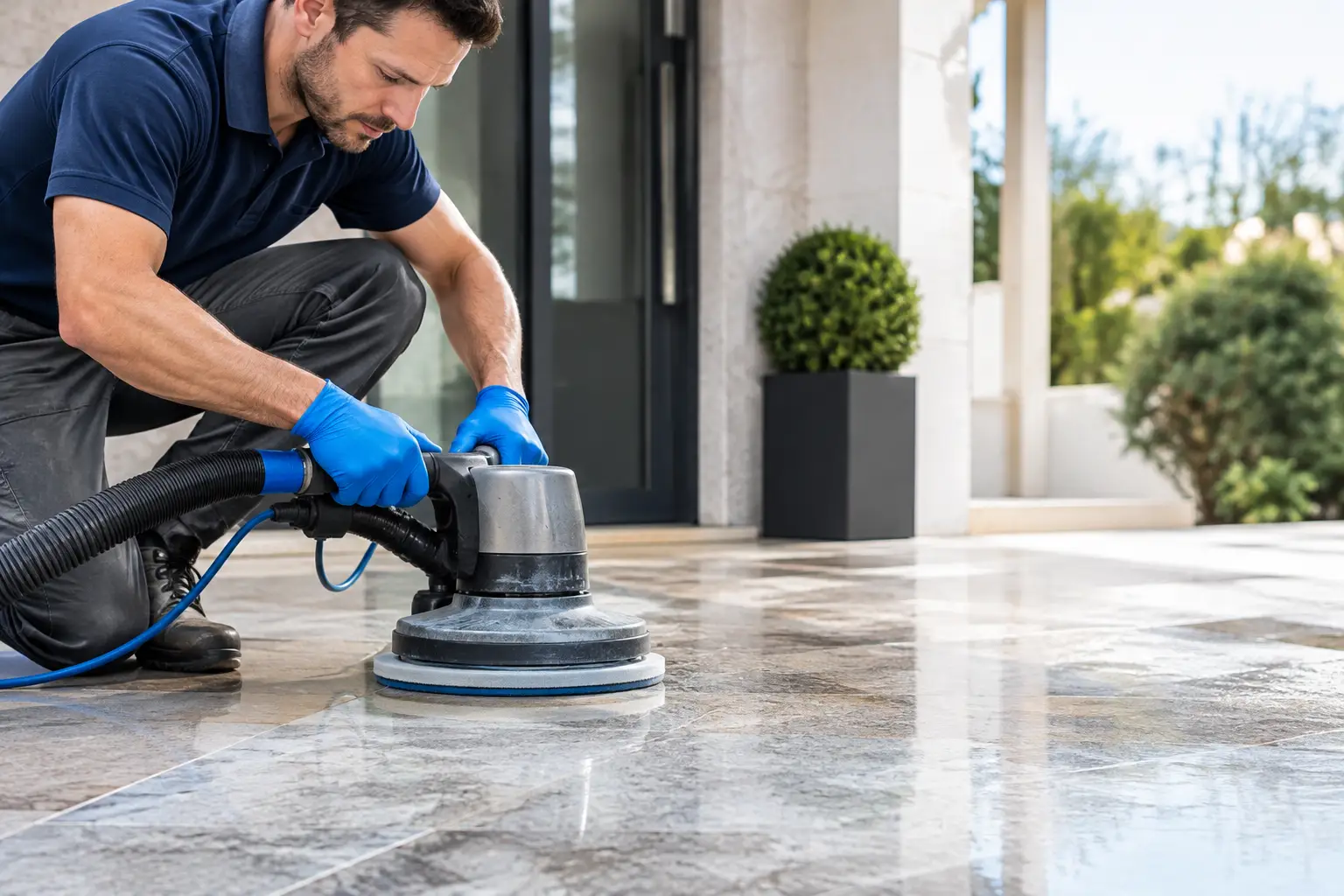
Tile and grout benefit from more than a mop. Grout is porous and textured, so soil can settle into lines that become darker over time. Professional equipment and appropriate cleaning solutions can address that buildup without relying on overly aggressive products that may damage nearby surfaces.
Wood flooring needs controlled moisture and products designed for finished wood. Excess water can seep into seams, while incorrect cleaners can leave streaks or compromise the finish. Natural stone calls for equally careful treatment. Marble can be polished, but it should not be handled like ceramic tile, and acidic products are not a safe shortcut.
Vinyl and luxury vinyl flooring are durable, but they still need the right maintenance. Dirt can dull the finish, and harsh chemicals may affect the surface over time. A professional assessment is useful when floors remain cloudy or sticky after routine mopping.
Reduce the Causes of Floor Contamination
The most cost-effective floor care begins before dirt reaches the flooring. Use properly sized entry mats both outside and inside entrances, and keep them clean enough to capture soil rather than redistribute it. During wet or snowy weather, add temporary matting where needed and check those areas throughout the day.
Place waste and recycling containers where people actually need them, particularly near break rooms and printers. Encourage fast reporting of spills so they can be addressed before they spread. If chairs roll across carpet every day, chair mats or other protective measures may reduce wear in workstations.
Cleaning products should be stored and labeled correctly. Staff members who handle routine maintenance need clear instructions for dilution, dwell time, and which products belong on which surfaces. More chemical is not automatically better. Improper dilution can leave slippery residue and may cause floors to look worse faster.
Signs It Is Time to Call a Professional
Some floor problems are not solved by increasing the mopping frequency. Persistent odors, recurring spots, dark traffic lanes, dingy grout, sticky hard floors, and cloudy stone are all signs that deeper service may be needed. So are floors that seem to re-soil almost immediately after cleaning.
A professional provider should be willing to ask about your flooring, traffic level, business hours, and problem areas before recommending a service. That conversation helps avoid unnecessary work while making sure the work that is done addresses the actual issue. Price matters, but so do trained technicians, proper equipment, respect for your workspace, and accountability if the result does not meet expectations.
Hoffman Carpet Cleaning provides professional floor and surface cleaning for businesses throughout the Albany-to-Saratoga region, with clear quotes and service backed by a 100% satisfaction guarantee. Scheduling professional care before floors reach a visibly neglected point is usually easier on both your budget and your workplace.
A well-maintained floor does quiet work every day: it supports a safer path through the office, protects the materials underfoot, and helps your business make the right first impression before anyone says a word.